Conjecture 27. Does 2+3+5+7+…n = x^2 have solutions finitely often. Here are some distinct solutions to this problem down below.
Sum of prime numbers 2 to 23 = 100, a perfect square
The next such sum is beyond the prime numbers under 20,000
Sum of prime numbers 2 to 22073 =25633969 Sq. root =5063
The next one goes beyond prime numbers under 60,000
Sum of prime numbers 2 to 67187 =212372329 Sq. root =14573
Next one is further beyond.
Sum of prime numbers 2 to 79427 =292341604 Sq. root=17098
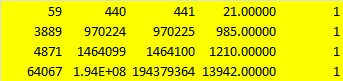
Conjecture 28. Is 2+3+5+7+… n /= x^y when y >2 ,where n is the nth prime number. This has been confirmed for all primes upto 10^5 and upto y=10. Conjecture 29. Is x^y – 2+3+5+7+… n =1 for y>1 where n is the nth prime number other than the case (21^2)-2+3+5+7+… 59=1. In the case of n=2 there is finitely many solutions. So for any higher power greater than two is there no solutions i.e the only consecutive powers are the square powers. This has been confirmed upto 10^5.
For all primes upto 10^5 there is only four such solutions for the case n=2.
https://numeracy.car.blog/wp-content/uploads/2019/09/img-20190930-wa0000-158807794.jpgConjecture no.30 Is there infinitely many prime sums that sum to a prime infinitely often i.e that 2+3+5+7+…n= a prime infinitely often. Many of these conjectures were inspired by Fermat’s Last Theorem and Catalan’s Conjecture. Thank you, Nunghead
 My Mathematics work and other extraneous diversions